
September 29, 2026
How to Choose an Event Activation
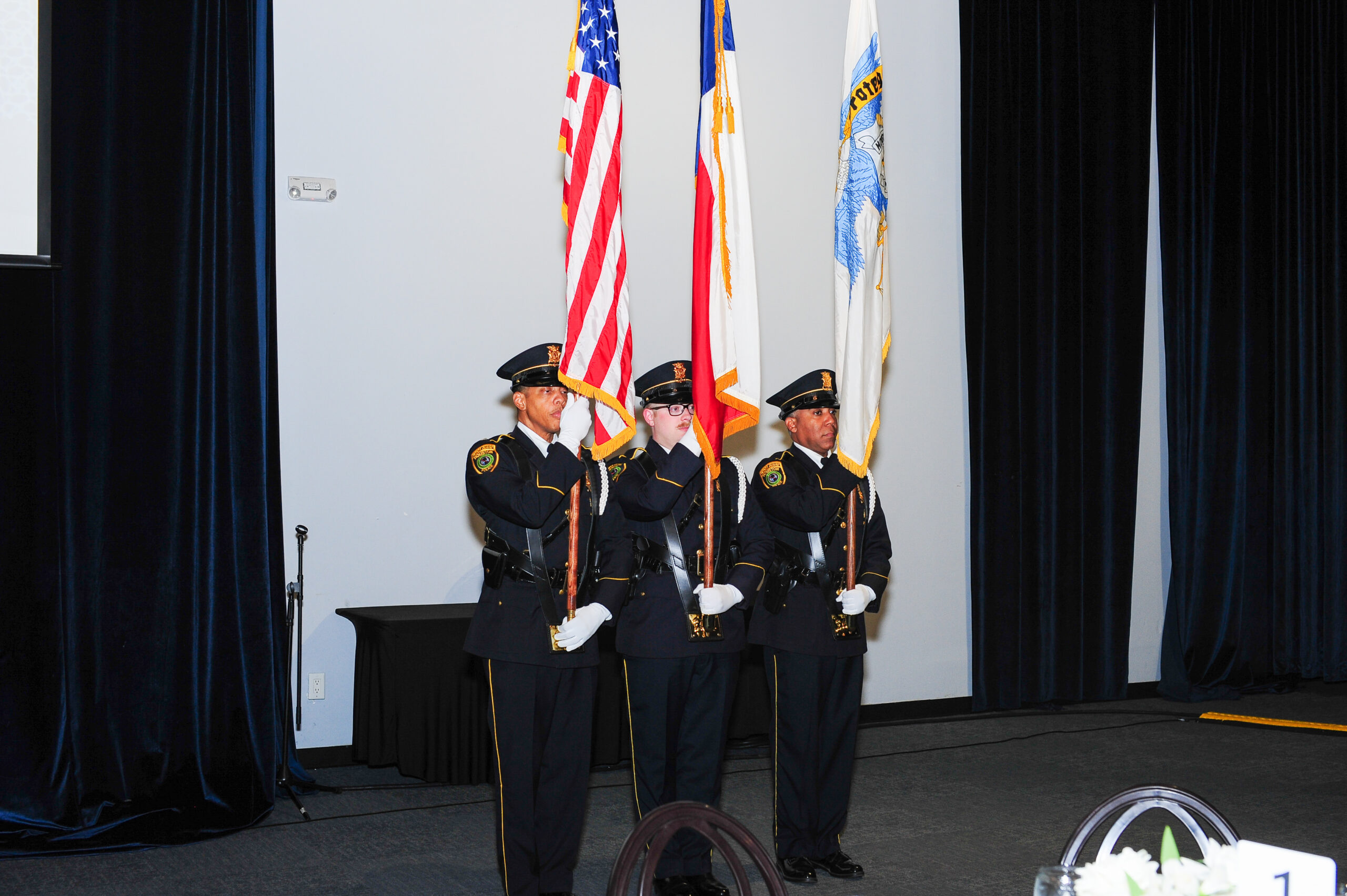
- Answer four questions in order; the format falls out of the answers.
- Throughput maths, not taste, eliminates most options.
- Ceiling height and power decide more bookings than budget does.
- Pick the format last. Picking it first is how events go wrong.
- One well-executed experience beats three competing for the same guests.
Most activation decisions start at the wrong end: someone saw a format they liked and works backwards to justify it. Reverse the order and the decision becomes almost mechanical. Four questions, asked in sequence, and the format falls out of the answers.
1. What does this need to produce?
Not “what do we want.” What has to exist afterwards for this to have been worth the money?
- Content for a campaign. You need a format built for video, in the right aspect ratio, with fast delivery. That points to a robot arm, a 360 booth, or a vogue-style experience.
- Broad reach across a big room. You need throughput, which points to a traditional or roaming format — and rules out the slow, glamorous ones.
- A physical keepsake. Trading cards, laser engraving, magazine covers, printed strips. Different production logic entirely, and lead times matter.
- Opt-in data. A capture flow with a transparent, quick consent step. This has to be designed in, not bolted on.
- A sponsor impression. Branding has to be inside the frame, not beside it, and the impression count has to be measurable.
- A moment of arrival or welcome. Placement and staffing matter more than the equipment.
Write one sentence. If you cannot, that is the real problem and no format will fix it.Pick the format last. Picking it first is how events go wrong.
2. Who is in the room, for how long?
This is where most plans quietly break, and it is arithmetic rather than judgement.
Take your headcount, decide what proportion should reach the experience, and divide by the open window. Then compare against realistic throughput:
- Traditional / mirror booth: 80–120 guests per hour
- Roaming experience: 60–100 per hour
- Robot camera arm: 40–60 per hour
- 360 booth: 25–40 per hour
A 600-person event with a 90-minute reception and a single 360 booth reaches roughly 50 people. If the client expects “everyone,” you have a problem now — which is much better than having it at 9pm.
Also weigh who they are. Seniority and dress code change what people will participate in. Executives in black tie will not step onto a raised platform. A younger consumer audience will queue twenty minutes for something genuinely novel. Mixed-mobility audiences rule out anything requiring a step up.
3. What will the venue physically allow?
Get these five numbers before you fall in love with a format:
- Ceiling height at the intended position. Under 10 ft eliminates a 360 booth. This single number decides more bookings than budget does.
- Clear footprint, measured, not estimated from a floor plan.
- Power — how many circuits, where, and dedicated or shared.
- Load-in path — dock, service elevator dimensions, stairs, distance from the loading point to the room.
- Rigging and attachment rules, plus whether the venue requires its own labour.
Houston’s most characterful venues are frequently the most constrained. That is not a reason to avoid them; it is a reason to ask early. A good partner will do a site check and tell you what the room can take before anything is promised to a client.
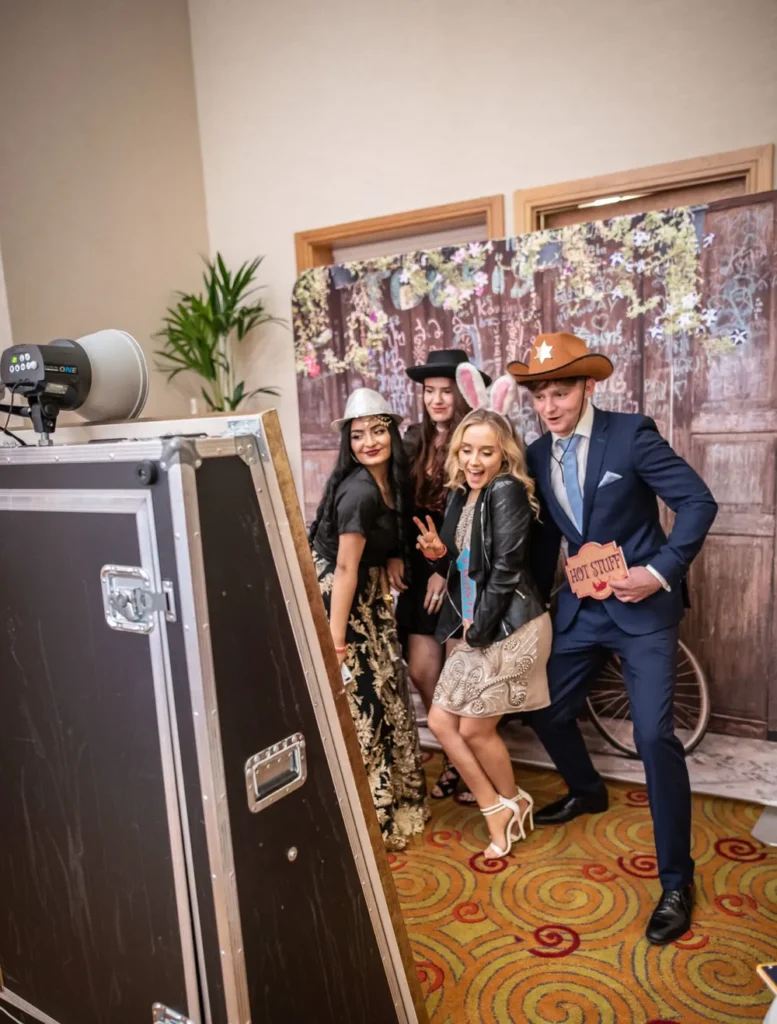
Throughput maths, not taste, decides how many stations a room this size needs.
4. Where does it sit in the run of show?
The same experience succeeds or fails on placement and timing.
- Arrival. Must be fast and legible with no explanation. A slow, complex format at the door creates a queue in the worst possible place.
- Cocktail hour. The most forgiving window — guests are mobile, unhurried, and willing to queue.
- Between reception and dinner. Where events lose energy. A good experience here makes the transition feel designed.
- During a seated program. Generally a mistake. You are competing with the stage.
- Late-night. Energy is high and inhibition is low. Formats that felt too playful at 7pm work at 11pm.
Also decide when it closes. An experience still running as the room empties looks like an afterthought; one that closes at a defined moment feels curated.
Matching the answers to a format
With four answers, the shortlist writes itself:
- Content-first, small premium audience, low ceiling → robot camera arm or vogue experience.
- Content-first, younger audience, adequate ceiling, generous window → 360 booth.
- Broad reach, large room, short window → roaming experience or multiple traditional stations.
- Keepsake-first, trade show or conference → trading cards, laser engraving, or magazine covers.
- Sponsor impression required → a built branded environment, whatever the capture format inside it.
- Arrival moment, formal event → staffed portrait or paparazzi format at the door.
Browse the full experience catalogue once you know which row you are in — not before.
Four expensive mistakes
- Choosing the format first. Everything above, in reverse. It is the most common and most expensive error.
- Three experiences instead of one good one. Variety sounds generous. In practice three stations in one window split the same guests, dilute the staffing, and produce three mediocre queues. Add a second station when throughput maths demands it, not for variety.
- Under-staffing to protect budget. The cheapest way to ruin a good activation. An unstaffed or thinly staffed experience produces unusable content and a bottleneck.
- Leaving delivery until afterwards. Same-night delivery drives dramatically more sharing than a next-day gallery, and it costs more because it means an editor on site. Decide it in the scope, not in the recap meeting.
Tell us the objective, the headcount, the venue and the window, and we will tell you which format fits — including when the simplest option is the right one. See what we build or start a conversation.